Automation in Cold Logistics
Working in a -20°C freezer requires specialized gear, strictly limits shift durations, and carries significant occupational hazards. To mitigate these human limits, massive cold storage operators are increasingly turning to complex automation systems built specifically to function in sub-zero environments.
Automated Storage and Retrieval Systems (AS/RS)
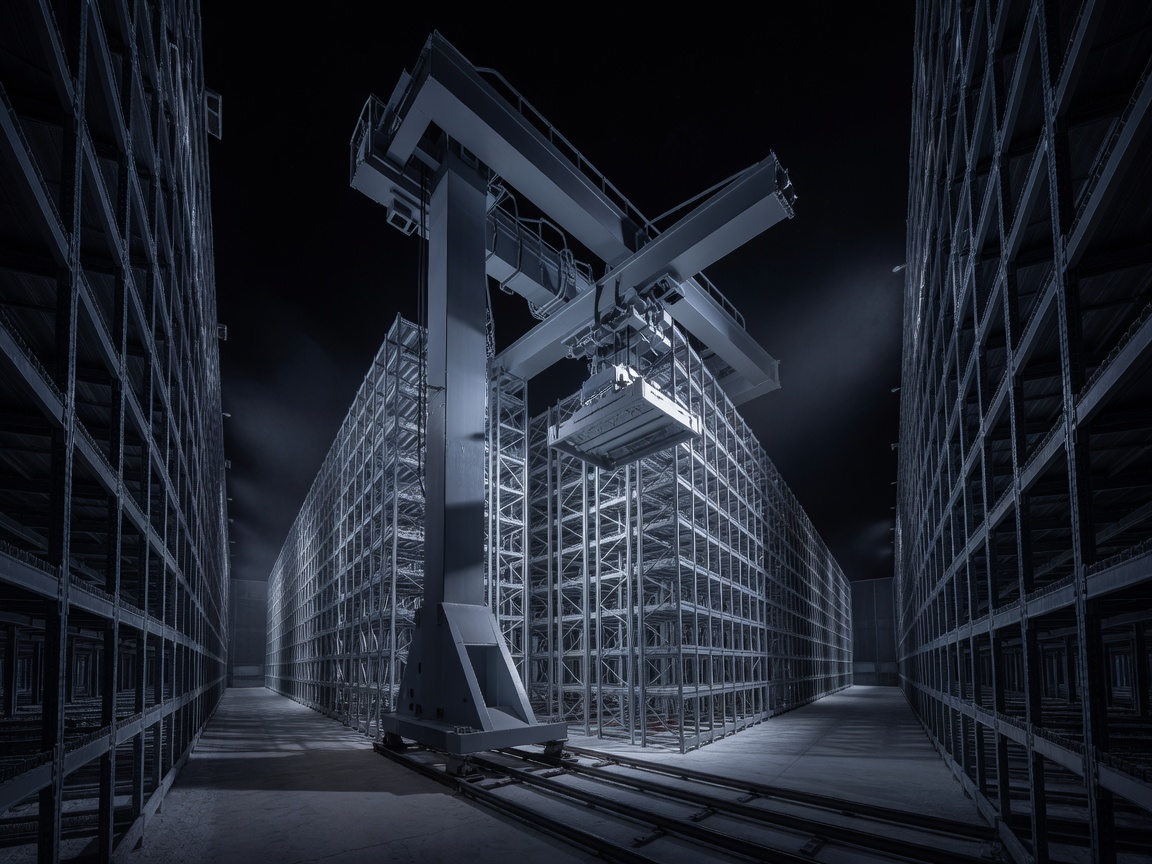
The centerpiece of modern cold automation is the AS/RS. Rather than relying on human drivers in heated forklift cabins to navigate wide aisles, an AS/RS utilizes towering robotic cranes that run on fixed rails between tightly packed shelving. Because these machines do not require the wide turning radiuses of manual forklifts, the aisles can be drastically narrowed.
This narrow-aisle configuration radically increases the storage density of the facility. High storage density is critical in cold logistics: a smaller physical footprint means less cubic volume of air to cool, directly reducing ongoing energy costs. The cranes maneuver vertically and horizontally at high speeds, capable of reaching pallet positions over a hundred feet in the air, extracting a loaded pallet, and returning it to a staging conveyor.
Engineering robotics for these temperatures involves overcoming unique metallurgical and electronic challenges. Standard lubricants freeze solid, requiring specialized low-temperature synthetic greases. Wiring insulation must be composed of polymers that do not turn brittle and shatter when subjected to constant movement in the deep freeze.
Mobile Racking Configurations
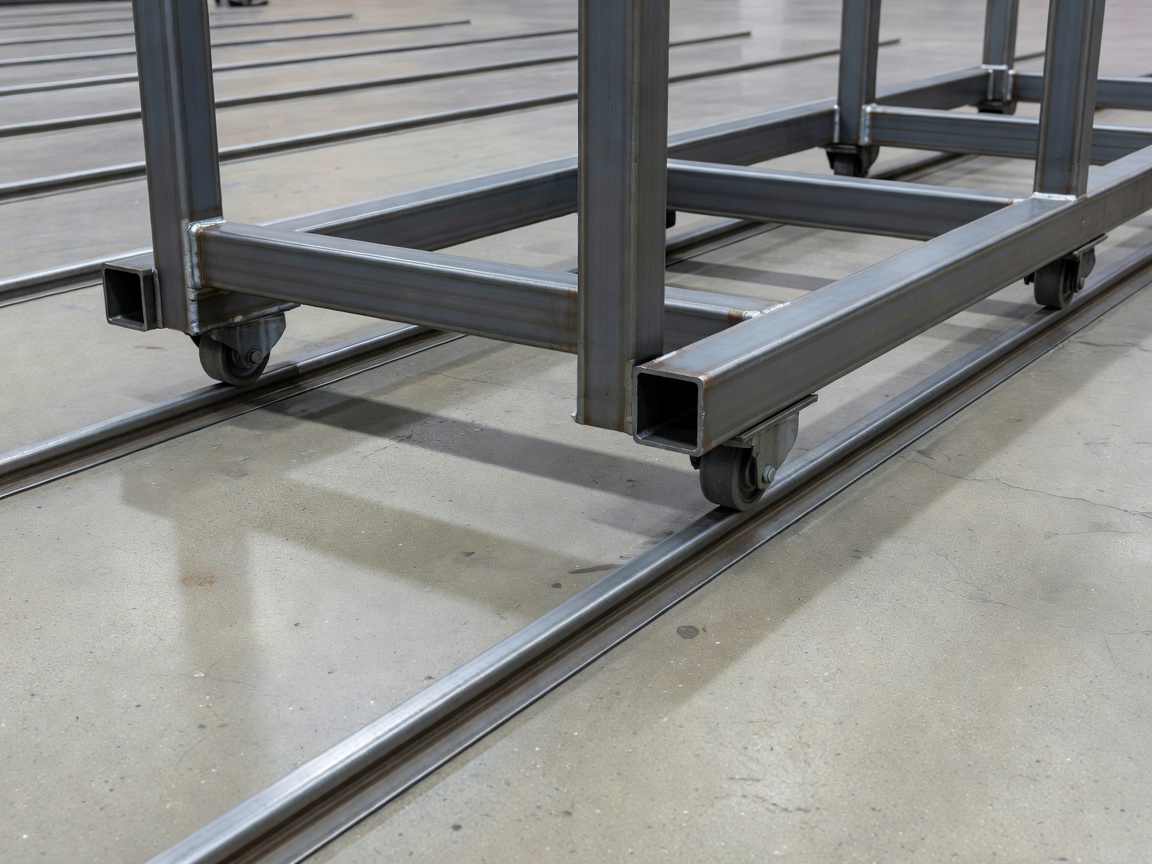
As an alternative or supplement to AS/RS, mobile racking systems provide high density at a lower automation complexity. In a mobile racking setup, the heavy steel pallet racks are mounted on electrically driven carriages that run on rails embedded into the insulated concrete floor.
The entire block of shelving sits tightly packed together, eliminating aisle space entirely. When a specific pallet is requested by the warehouse management software, the carriages slide apart along the rails, opening a single access aisle exactly where the forklift or automated guided vehicle (AGV) needs to enter.
This method allows operators to utilize up to 80% of the available floor space purely for storage, compared to the 40% typical in static racking. The heavy-duty electric motors driving these carriages are fitted with internal heaters to prevent condensation and icing on the commutators.